Pages

Tuesday, February 19, 2013

Evangelism Ain't Just for Jesus Any More.

3 Simple Steps to Evangelical Marketing

Customer Evangelism is HOT "MMMMMMMM this is sooooooooooo good! You should have some!" Now, THAT'S an example of evangelical marketing.

It's not new, neighbors talk and share excitement of a product/service.  I'm looking for new cleaning people, I'm asking around (seriously, if you're in Central Florida and know a good house cleaner, please email me).

Guy Kawasaki, the former chief evangelist of Apple Computer, is the father of evangelism marketing. In his books “The Art of the Start" and "How to Drive Your Competition Crazy” Kawasaki states that the driving force behind evangelism marketing is the fact that individuals simply want to make the world a better place.


Blabber-Mouths Are Your Friends
Building word of mouth into full-fledged evanagelism grows companies faster than traditional marketing

This past month, I worked with Wyndham Vacation Ownership to get their loyal owners to share the good news with friends.  Wyndham has a great product and their customers are really happy.  So, what's the trick to get those customers to go out and spread the news?

Incentives do not work. Monetary isn't the thing that gets these people motivated.  

Look at various religions that focus on getting the news out.  Do they offer those MONEY?  No, they just want you to join in the fun on Sunday. Some use the threat of eternal damnation (that's another blog).  But the key is it's EMOTIONAL not MONETARY.  You want your friends to be happy and you want them to know you're the one that got them that happiness --that's the payout (ego, ego, ego!).  Evangelist customers spread their recommendations and recruit new customers out of pure belief, not for the receipt of goods or money.  

The goal of the customer evangelist is simply to provide benefit to other individuals.

Some evangelicals believe rule number one is you MUST have an excellent product or service.  I don't.  (of course, it's terrific if you do and I'm going to assume ya'll are perfect). But, more importantly, focus on the benefits and tell your customer the benefits --over and over until they believe it and know it.  "This thing is AMAZING" is what should come out of your customer's mouth.

1.  BRING EMOTIONAL CONNECTION
Emphasize the benefits that customer has experienced and keep doing it.  Don't lose contact after point of sale.  In this communication, do not try and sell them something new, focus on the joy and aid that your product/service has brought to their world. 
  • After some time from purchase, contact customer and ask/remind them about service, emphasis on the feel-good factor. When they say something nice about your product/service, repeat it to them.
  • Tell them how much you value them and that single purchase (do not try and sell them another product, keep focused on the one they have and that they LOVE it).
  • Then, as my line is: "put your hands in your lap and listen."

2.  HIPPIE LOVE:

Build A Community for Your Clients

Encourage your customers to mingle, either physically or virtually - build a coalition of customers around your cause. All religion is communal even monks as they're studying within, go to retreats with other monks to do their thing (http://www.trappist.net(. In a seminal 1986 study, McMillan and Chavis identify four elements of "sense of community": 1) membership, 2) influence, 3) integration and fulfillment of needs, and 4) shared emotional connection.  Communities have their own buzz-words, make sure people can post on your facebook page, have parties where customers can meet each other, etc...
POST (below, in blog-comment section)  IDEAS FOR BUILDING SENSE OF COMMUNITY.
Starbucks Corporation, started an online customer community in 2008 called My Starbucks Idea, designed to collect suggestions for products or services and feedback from customers.[1] During the first year of the program, My Starbucks Idea generated 70,000 ideas through the site and approximately 50 changes based on customer suggestions were implemented.

3. CREATE A CAUSE
Focus on making your world, industry, community, and company a better place because you were involved. 

It doesn't have to be all feel-goody granola-save-the-planet-rhetoric.

Your cause maybe to get those women out of mom-jeans, or bad logos out of our face (that's watergraphics' cause), or housebound dogs out into the world! What is your product and how does it make all of our world BETTER?!  Focus on that --emphasize your service/product and how the WORLD benefits!

Organizations as diverse as Southwest Airlines, Krispy Kreme Doughnuts, The Dallas Mavericks, IBM, and others successfully built their customer base and created targeted marketing programs to involve their biggest fans. These programs have produced legions of unofficial salespeople and a cost-effective and powerful marketing force.


Evangelical marketing is going to benefit your customers; they're going to loooooove you. Share this article directly with your customers to show you're thinking of better ways to connect, enhance their lives and to make our world a better place!

Friday, November 9, 2012

brand-schmand

Word on the street is you look outdated, confusing and you're missing the mark.  Are you a tech company but look like a fashion-designer label? 

whooooooooopsie! 

"Being powerful is like being a lady. If you have to tell people you are, you aren't."
- Margaret Thatcher

Make it easy for people to just 'get' you at first glance.

But be careful!  Even a big company can phyk it up:: 


Gap's Logo Redesign Disaster


Gap messed with a brand that was working and greeted by backlash from thousands of angry customers in social media, who were attached to the recognizable blue box  "if it ain't broke, don't fix it" would've been sound advice. Its customers were already loyal to the original logo.


Here's a thought: include your customers in important decisions like changing your logo. 
Setting up a focus group can help companies view things from their customers; perspective and make more educated decisions. If Gap had taken some of these steps, they might have avoided the social media backlash.  If you're small business, reach out to a hand full of your clients for their feedback (also a good sales technique to lock in that relationship.)


Watergraphics was part of a crowdsourcing solution for this mess:


watergraphics' redesigned gap logo --so much better!!! 


An example of branding that works::
Duh--call an apple an apple.  Radiant Life needed a name and branding for their technology arm.  Watergraphics suggested to use a part of radiant life's name and integrate into more of a technology title.  Company names that end in the hard 'k' sound are stronger and make impact (in English speaking countries) --something about that 'ACK' we like.  So, RADTEK was created.
First WATER asked Radiant Life to provide a creative brief of what they wanted their brand to say and here's what they provided:

    - we have a broad base of experience AND we are up to date on a wide range of technologies
    - our experience saves time and money on projects
    - we can help lead your whole team, and transfer techniques and strategies for long-term improvements
    - we can easily communicate and work with all levels and areas of your business
expertise * efficiency * effective, easy communications


TA-DA 


Watergraphics just finished this logo-type.  Guess what this company does.


Proper branding can result in higher sales of not only one product, but on other products associated with that brand. For example, if a customer loves Paul Newman's  salsa and trusts the brand, she is more likely to try other products offered by the company such as chocolate chip cookies. Brand is the personality that identifies a product, service or company (name, term, sign, symbol, or design, or combination of them) and how it relates to key constituencies: customers, staff, partners, investors etc.

It's not rocket-science, fo sho...  it's just my business.

Wednesday, August 24, 2011

Can You Judge a Book by Its Cover?


Loving this. It's the delicious Book Cover Archive - "an archive of book cover designs and designers, for the purpose of appreciation and categorization".

If you're on the verge of designing a book cover --here's your plan::

Establish a principal focus for the cover—Nothing is more important. Your book is about something, and the cover ought to reflect that one idea clearly.

Cover Design Guideline
  1. One element to take control, that commands the overwhelming majority of attention, of space and cover's emphasis. Your book cover is a billboard, trying to catch the attention of browsers as they speed by. Billboards usually have 6 words or less. You have to “get it” at 60 miles per hour, in 3 to 5 seconds.

    A book cover needs to do the same thing. At a glance your prospect ought to know;

    • the genre of your book,
    • the general subject matter or focus, and
    • some idea of the tone or “ambiance” of the book.

    Is it a thriller? A software manual? A memoir of your time in Fiji? Your ideas on reform of the monetary system? Each of these books needs a cover that tells at a glance what the book is about.

  2. Make everything count—If you'e going to introduce a graphic element, make sure it helps you communicate with the reader.
  3. Use the background—General rule is to avoid white backgrounds, because it disappears on retailer’s white screens. Use a color, a texture, or a background illustration instead. --but oh how I looove clean + white striking designs --ding dang.
  4. Make your title large—Reduce your cover design on screen to the size of a thumbnail on Amazon and see if you can read it. Can you make out what it’s about? If not, simplify.
  5. Use a font that’s easy to read—See above. There’s no sense using a font that’s unreadable when it’s radically reduced. Particularly watch out for script typefaces, the kind that look lacy and elegant at full size. They often disappear when small.
  6. Find images that clarify—Try not to be too literal. Look for something that expresses the mood, historical period, or overall tone of the book; provide a context.
  7. Stay with a few colors—If you don’t feel comfortable picking colors, look at some of the color palettes available online to get a selection of colors that will work well together.
So, YES! You can judge a book by its cover --we all do it {okay I don't know about you, I'll just speak for my designer-self, YES I CAN!}

Tuesday, April 26, 2011

QR Code madness


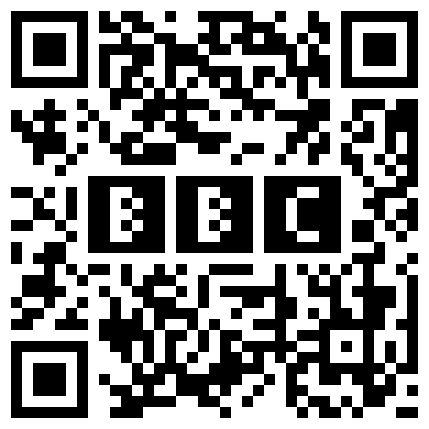
Have you seen this squirly pixel box?

by Kimberly A. Hawkins   facebook.com/watergraphics

This silly box is a QR code (short for Quick Response). Flip through this month's ELLE magazine and check out all the lil pixel boxes placed within the ads.  Have you seen one and didn't know just what the heck it was?

I've  been slipping QR codes on all kinds of client's projects: direct mail pieces, movie posters, business cards, in-store displays and I will be putting one on a billboard next week. I started implementing them into design about a month ago and now I see them everywhere --and I bet, now you will too.  

:: What is a QR code

A QR code is a 2-D barcode that can be scanned by a smart phone's camera and transfer information. Based on the type of code it is, it might direct the viewer to a website, make a phone call, deliver a vCard or more.

:: Effective Use in Your Marketing Campaign

QR codes are fairly new to US (no surprise, they're big in Japan), many people won't recognize them or won't have a smart phone with a QR reader installed, which limits their impact.   A Harvard study resulted that YES we need to put directions next to the code: http://www.mobilemarketer.com/cms/opinion/columns/8121.html

Limited the instructions is perfect solution: ACTION (scan), FEATURE (where this leads audience) BENEFIT (will they get sale items or whatever)

example: 'SCAN, WATCH, LEARN"

You need to determine if QR codes are a good fit for your business and your audience. If you feel there's a place for QR codes in your marketing toolbox, here are some creative suggestions on how you can take advantage of QR codes.

  1. QR Codes on business cards. Eliminate all the type-clutter and create a QR code that leads people to your Twitter, Facebook, LinkedIn, YouTube, Flickr, Plaxo, Yelp, FourSqure, Digg, Delicious, StumbleUpon, Whrrl, and MySpace profiles. clean + sleek.
  2. Labeling. Check this out: a restaurant patron is enjoying wine from your vineyard. They notice the QR code on the bottle and quickly scan it. That takes them to a mobile site where they can learn more about your wine, your vineyard, and links to where you can buy a case for delivery...all before the check comes.
  3. Storefront displays. Few retail businesses are open 24/7. Don't (fully) disappoint potential customers after you've left for the day. Create a Shop Online Now! QR code and put it in your storefront window. One quick scan and you've turned a potential lost sale into an online customer who's going to share a lot more of their contact information with you.
  4. Promotions, discounts and giveaways. If you want to encourage patronage from the iPhone and Android set, you could create discounts that are specific to the QR codes. You could run these codes in advertisements or post them throughout your store. You could even turn them into a "retweet" so that your shoppers share their discount with their followers.
  5. Laptop stickers. Slap a QR sticker of your vCard or website to your laptop, making it easier for other geeks to connect with you when you're local coffee shop.
  6. T-shirts. Put your QR code on your t-shirt for some shameless self-promotion. Or, make a bigger impression by printing up 100 t-shirts and put them on 100 interns and have them attend a public event like a ballgame, street fair or campaign stop. For more engagement from the crowd, put different messages on the shirts, so people take more scans of more of your codes.
  7. Get funky with your QR Code design. QR codes allow a little wiggle room, meaning that you can "hack" the code itself. A famous, early example is the BBC's QR Code. However, you can play around with the QR code once it's been generated in an image editing tool like Photoshop and work in your own logo or brand. Always be sure to test your QR code before printing up a few thousand copies, however.
  8. Use QR codes to get Likes and Follows. You can create mobile-friendly landing pages with Facebook like buttons or lead them to your Twitter page for a quick follow. The name of the game is engagement, so a like or follow can create a long-term marketing opportunity. Caveat: so far the Like buttons that QR tags generate lead to the Facebook website rather than the mobile app. I don't know about you, but I rarely log into Facebook's website from my phone, so that requires extra steps the average person may not be willing to take.
  9. Supplement your retail space. QR codes next to pieces of art could help art galleries move more art, or museums replace those aging audio tape tours. Hardware stores could link to how-to videos on YouTube of how to use specific power tools. Groceries could link to pages that talk about how their products were sourced, and perhaps to interviews of the farmers who grew the food. Electronic shops could bring visitors to review sites so they could get unbiased reviews of stocked products. Or to an e-commerce site where shoppers could buy out-of-stock items. Book stores could link to their own reviews of books on their blog.
  10. Increase e-commerce sales. Since QR codes can lead to URLs, you can create a code that will populate a shopping cart with specific products. (Assuming your e-commerce solution can handle that.)
  11. Build your email subscriber list. Use your QR code to send people to your email signup. Just make sure you give people a compelling reason to subscribe to your list...otherwise you will have just wasted their time. Not the best way to engage your audience.
  12. Get the phone ringing. QR codes can also make a phone call. (Oh, imagine the mischief!) If you want to get the phones ringing--at your business or at campaign headquarters--you can create a code that will dial a predetermined number. Likewise, QR codes can generate SMS text messages.

There are plenty of ways to use QR codes to connect and engage your audience.

I looove love how South by Southwest conference used 'em! Organizers of the Austin gathering for film, music, and Web geeks even included a QR code on every registrant's badge to cut down on paper waste and manual data entry.  The SXSW site explains: "When you meet someone at an event, let them scan your badge with their smart phone, and they will automatically be following you on [the conference's social network] my.SXSW, where they can message you or access your contact information. Hopefully, this will cut down on the paper footprint of SXSW by reducing the need for business cards."

QR codes can provide additional information, including photos, reviews, directions and event dates and times. There's a certain amount of fun and surprise with QR Codes, so that you can take advantage of a "what's behind door number one" mentality.

Have you used QR codes in your marketing and communications? If so, how are you using them, and what results have you seen? Share with me in the comment section.

Wednesday, April 13, 2011

inspire desire

I loved them then, and I love them now. When the Sprouse 4 Vuitton knock-offs first appeared on the street corners --Steven was excited that his fakes sold for $90 ON THE STREET! Some of is friends purchased knock off LV bags and had Sprouse write shit all over -- so enjoy my collection of these images that I used to inspire some pattern design for various skins today --- I'd lOVE to see what you came up with!


Wednesday, March 23, 2011

trade mark legal-begal

WTF is a Trademark?
TM
✻ ® ✻ ?
Kim Hawkins
✻watergraphics✻✻March 2011

I design a ton of logos and encourage watergraphics' clients to trademark. As a designer, the legal part of graphic design, albeit interesting, riles up a bit of confusion. I have it all spelled out for you:

What is a Trademark? Trademark law prevents businesses from operating under business names – or using logos – that are likely to be mistaken for the name of an existing competitor.

For a more complete definition, here’s how the U.S. Patent and Trademark Office defines a trademark: “any word, name, symbol, or device, or any combination, used, or intended to be used, in commerce to identify and distinguish the goods of one manufacturer or seller from goods manufactured or sold by others, and to indicate the source of the goods. In short, a trademark is a brand name.”

A service mark is similar to a trademark – but it’s used to distinguish the services of one provider from services provided by others (and to indicate the source of the services).

What’s the difference between copyright and trademark law?
Copyright and trademark law both protect intellectual property – but they protect different things. Copyright protects works such as poetry, movies, writing, music, video games, videos, plays, paintings, sheet music, recorded music performances, novels, software code, sculptures, photographs, choreography, and architectural designs. Trademarks are names, logos, sounds, shapes, colors and even smells that distinguish the source of goods or services of one party from those of another party.

Example: A computer software program may be copyrighted. The name of the software can be trademarked.

:: If a trade name or logo is protected by copyright law, is it automatically protected by trademark law?
No. A trade name or logo design might be protected by copyright law, but is not protected by trademark law unless it is actually used in commerce. This is because trademark rights arise only through commerce (such as when you offer items for sale and use the trade name or logo in your marketing materials or on the products).

:: Must a trade name or logo be registered with the U.S. Patent and Trademark Office to be protected by trademark law?
No. You are not required to register a trade name (or logo). You can acquire common law rights simply by using the trade name or logo in commerce.

:: Do you have to be a U.S. citizen to register a trademark?
No. But you must disclose your citizenship in the application.

:: How Long Does a U.S. Trademark Last?
U.S. Trademark registrations filed today have a 10 year term. NOTE: There are periodic requirements to maintain an active registration and you must follow those requirements or risk losing your trademark registration.

:: Can you sell or assign a trademark to another person?
Yes. If your mark is registered, you can (but don’t have to) record the transfer with the U.S. Patent and Trademark Office.

:: I s a U.S. trademark or use solely in the U.S. sufficient to acquire trademark rights around the world?
No. Trademark rights are territorial. If you’ve registered your trademark in the U.S., you can generally enforce it only against those who infringe it in the U.S. Many European countries have adopted the Community Trademark (CTM) – a registration under that common system allows the enforcement of rights in all of the signatory countries. The CTM doesn’t replace national trademark rights in the signatory countries, but it does coexist with those rights.

If you own a U.S. trademark or have applied for one, you can seek registration in any of the countries that have joined the Madrid Protocol by filing a single application – called an “international application” – with the International Bureau of the World Intellectual Property Organization.

What Should Small Businesses Do To Avoid Violating
or to Leverage Trademark Law?


Here are five practical tips about trademark law and your trade name or logo:

:: 1 :: Do a trademark search before you settle on a trade name and/or logo. You can search (for f::ree) the federal trademark database – Trademark Electronic Search System. One good alternative: a recent startup, Trademarkia, allows you to search trademarks for free – and can help you file your trademark application. You can also leverage Google, Bing and other search engines to look for companies using the name you intend to use for your company or product. Don’t forget to do a domain name search to see if someone is using the name as their domain.

It’s always a good idea to hire a trademark search service – even if you think you’re a good researcher. Professional search costs several hundred dollars (and can cost thousands of dollars depending on their coverage), but covers many more databases than you’ll have access to, will often include an international search, and will typically be much more thorough. Although more expensive than many others, this is the company I often used when working with clients on trademark matters.

Intellectual property lawsuits can be very expensive. Take care to make sure that you’re not exposing yourself to unnecessary risk.

:: 2 :: Register your trademark. You are not required to register a trade name (or your logo). You can acquire common law rights simply by using the trade name or logo in commerce. However, registering the trade name or logo can help. Among other things, it notifies others that you assert rights over the trade name or logo and that you’re serious about protecting your rights. The registration date also contains the date you first used the mark – which serves as evidence against other parties you might later allege violate your trademark rights. Moreover, when you’ve registered your trademark, you can sue those who infringe your mark to recover damages and also attorneys’ fees and punitive damages.

You can hire watergraphics or your own attorney to help you register, or do it yourself. .If you need answers to specific trademark questions about U.S. registration, you can also contact the Trademark Assistance Center at 1-800-786-9199.

:: 3 :: Maintain your trademark if you’ve registered it. If you’ve registered your trademark, continue using it in commerce. Don’t forget to use the “®” symbol once your registration is approved – this lets everyone know that your trade name or logo is registered. If you haven’t registered, you can use the “tm” trademark symbol to let people know that you assert trademark rights in the trade name or logo but that it’s not officially registered.

:: 4 :: You can file a trademark application before you use a mark in commerce. This is especially helpful to startups – you don’t need to wait to use a trademark in commerce – you can file an Intent-to-Use application with the U.S. Patent and Trademark Office.

:: 5 :: Understand the Permitted and Prohibited Uses When You Use Another Company’s trade name or logo. Often, especially when companies enter into partnership agreements with each other, the partners must use someone's trade name or trademark. For example, if I have a small electronics store and advertise Sony products for sale, I may use the Sony logo in the advertising I place in the local paper. Make sure you have rights to use the trade name or trademark. Don’t assume that you have unlimited rights – you most likely do not (even if you’re authorized to resell a particular company’s products or services).

Similarly, if you allow other parties to use your trade name or logo, make sure you carefully define how they should use the trade name or logo – and also specify any uses that are not permitted. Watergraphics will provide this for you as part of your branding package.

If you get into a jam or are unsure about what to do – consult an attorney.

Please remember that legal information is not the same as legal advice. This post may not address all relevant business or legal issues that are unique to your situation and you should always seek legal advice from a watergraphics approved licensed attorney.

:: follow designer*sjuice ::

Tuesday, March 22, 2011

typ-o-lishous


 photo tw_1.jpg  photo fb_1.jpg  photo ins_1.jpg  photo bl_1.jpg  photo tum_1.jpg  photo gplus_1.jpg  photo pin.jpg  photo yt.jpg